China Best Back Pressure Regulator Supplier?
Choosing the China Best Back Pressure Regulator Supplier? The answer depends on more than price, product photos, or fast replies. A reliable supplier should understand pressure control in real operating conditions. This includes fluctuating inlet pressure, corrosive media, temperature changes, and continuous production cycles.
A Back Pressure Regulator must hold upstream pressure steadily. Small errors can affect flow stability, equipment safety, and product quality. Ask suppliers for tested pressure ranges, body materials, seal options, and connection standards. Request inspection records, calibration data, and clear technical drawings. These details reveal practical engineering ability.
Experience matters here.
A capable manufacturer should explain why stainless steel, brass, or special alloys fit your medium. They should also discuss diaphragm life, spring selection, leakage testing, and maintenance access. A supplier that only repeats catalog language may not understand your application. That is a warning sign.
Independent certifications can support credibility, but certificates alone are not enough. Verify their scope, issuing organization, and product relevance. Factory audits, sample testing, and customer references provide stronger evidence. Reliable suppliers communicate limitations honestly. They should not promise perfect performance under unknown conditions.
No supplier is perfect. Even experienced manufacturers can misunderstand a complex specification. A careful buyer should confirm every critical detail in writing. Consider response time, spare parts, warranty terms, and technical support after delivery. The best partnership is not always the cheapest one. It is the one that performs consistently, documents its work, and accepts responsibility when improvement is needed.
What Is a Back Pressure Regulator and How Does It Work?
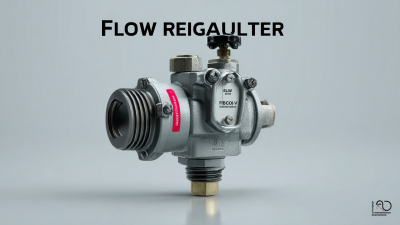
A back pressure regulator controls pressure upstream of the valve. Unlike a standard pressure-reducing regulator, it does not mainly protect the downstream line. It keeps the inlet side near a selected pressure while allowing controlled flow forward.
Inside the regulator, a diaphragm senses upstream pressure. A spring or pilot signal sets the pressure target. When inlet pressure rises above that setting, the valve opens further and releases more fluid. When pressure falls, the valve closes gradually. This response helps stabilize pumps, separators, storage vessels, and process lines. Small pressure changes matter.
In practical installations, sizing depends on flow rate, fluid type, temperature, and pressure drop. A valve that is too small may create noise, vibration, or unstable control. A valve that is too large can hunt around the setpoint. That assumption is often wrong. Engineers should also check diaphragm materials, connection standards, relief protection, and maintenance access. I have seen systems fail because the sensing line was placed near turbulence. A calm, correctly positioned sensing point usually gives more dependable readings. The final setting should be tested under real operating conditions, not only during a bench check.
Key Types and Applications of Back Pressure Regulators
Back pressure regulators maintain upstream pressure by restricting downstream flow. Their core value is stability, not simply pressure reduction. Spring-loaded models suit clean gases, water, and general process lines. Pilot-operated regulators handle higher flow rates and tighter control. Dome-loaded designs respond quickly when pressure changes rapidly. Differential-pressure regulators are useful across filters, heat exchangers, and dosing systems.
The choice depends on fluid, temperature, flow range, and pressure accuracy. For corrosive chemicals, engineers often specify stainless steel or alloy wetted parts. For oxygen-rich service, cleaning and material compatibility require careful verification. In hydrogen systems, leakage control becomes even more important. The International Energy Agency reported that announced low-emission hydrogen projects could reach about 49 million tonnes of annual capacity by 2030. That growth increases demand for reliable pressure control, but project announcements are not operating plants.
Application details matter. Chemical plants use regulators to protect pumps and maintain reactor pressure. Gas distribution systems use them near storage, testing, and metering equipment. Water treatment lines need stable pressure despite changing demand. Semiconductor facilities require clean construction and low particle generation. The industrial valve market was valued at approximately USD 78.8 billion in 2024, according to MarketsandMarkets, with continued growth expected through 2029. This figure covers more than regulators, so it should not be treated as a direct regulator forecast. When assessing a China-based supplier, request material certificates, pressure-test records, calibration data, and documented leak-test methods. A polished catalogue is helpful. It is not proof of field reliability.
Essential Criteria for Choosing a Chinese Supplier
Choosing China’s best back pressure regulator supplier starts with evidence, not a low quotation. Grand View Research’s pressure regulator market analysis projects continued growth through 2030, driven by process industries and energy infrastructure. That growth raises the cost of inconsistent control. Ask for Cv tests, set-pressure tolerance, seat leakage results, and material certificates for each wetted part. A clean test bench matters. So does traceability.
A credible factory should map incoming inspection, machining, assembly, calibration, and final release under a documented quality system. The 2022 ISO Survey recorded more than 1.2 million ISO 9001 certificates worldwide, so certification alone cannot prove competence. Check the certificate scope and audit status. Request three recent batch records, not a polished sample. For corrosive gas or steam, verify compatibility against recognized standards. Demand temperature, pressure, and failure-mode data. Details expose gaps.
Field support is another hard criterion. The U.S. Department of Energy notes that compressed-air systems may lose 20–30% of supplied air through leaks and poor operation. Unstable regulation can worsen that waste. Require response times, spare-parts lists, calibration intervals, and remote troubleshooting procedures in writing. A supplier should explain what happens after a diaphragm fails at 2 a.m. I would also inspect packaging, labeling, and serial-number control before shipment. A factory visit can impress, yet one visit cannot validate long-term reliability. Independent inspection and a pilot order remain wiser.
China Best Back Pressure Regulator Supplier? Essential Selection Criteria
Suggested evaluation weighting for comparing Chinese back pressure regulator suppliers without relying on company or brand data.
Technical compliance and product reliability should receive the greatest attention, followed by documentation, customization capability, delivery performance, and total cost.
How to Assess Product Quality, Certifications, and Compliance
Choosing a China-based back pressure regulator supplier requires more than comparing prices. Product quality appears in details: stable outlet pressure, smooth adjustment, leak-free seals, and clean internal machining. Ask for material certificates, pressure-test records, calibration data, and batch traceability. A serious supplier should explain testing methods, not only provide attractive photographs.
Certifications need careful review. ISO 9001 can show a controlled quality system, but it does not prove every regulator performs well. Check whether certificates are current, authentic, and relevant to the supplied factory. Request third-party test reports when the regulator serves demanding industrial systems. Confirm pressure ratings, temperature limits, connection standards, and documentation requirements for your destination market. Compliance is application-specific. A certificate alone is never enough. I have seen technically impressive documents fail to match the delivered configuration, so independent inspection remains worthwhile.
Tips: Compare samples against drawings before approval. Verify serial numbers and calibration dates. Ask how nonconforming parts are handled. Inspect sealing surfaces under proper lighting. Keep one approved sample for future comparison. Small checks prevent expensive surprises. An on-site or independent audit may reveal weak process control, although audits can miss problems between production batches. That limitation deserves attention. Reliable suppliers accept technical questions, disclose limitations, and support corrective action with dated evidence.
Comparing the Capabilities of China-Based Suppliers
Choosing a China-based back pressure regulator supplier requires more than comparing prices. UNIDO’s International Yearbook of Industrial Statistics 2024 places China’s share of global manufacturing value added at about 31%. This scale supports strong machining, casting, testing, and export capabilities. However, manufacturing depth does not automatically prove regulator reliability.
The ISO Survey 2022 recorded more than 570,000 ISO 9001 certificates in China. Certification helps, but it is only a starting point. Ask suppliers for material certificates, pressure-test records, calibration traceability, and documented setpoint accuracy. Practical experience matters here. A capable factory should explain how it controls spring tolerances, seat wear, diaphragm fatigue, and leakage after repeated cycles. Request test data at your actual inlet pressure, outlet range, temperature, and flow rate. Generic charts are not enough.
Compare engineering response times, prototype control, inspection equipment, and after-sales support. Can the supplier provide a clear drawing within days? Can technicians analyze unstable downstream pressure without blaming installation? These details reveal capability. I would also review sampling plans and nonconformance records, although many suppliers hesitate to share them. That hesitation deserves attention. The cheapest quotation may hide weaker traceability or inconsistent assembly. A fair comparison should measure total operating risk, not only unit cost. No supplier is perfect, and even a well-documented factory needs independent validation before critical service.